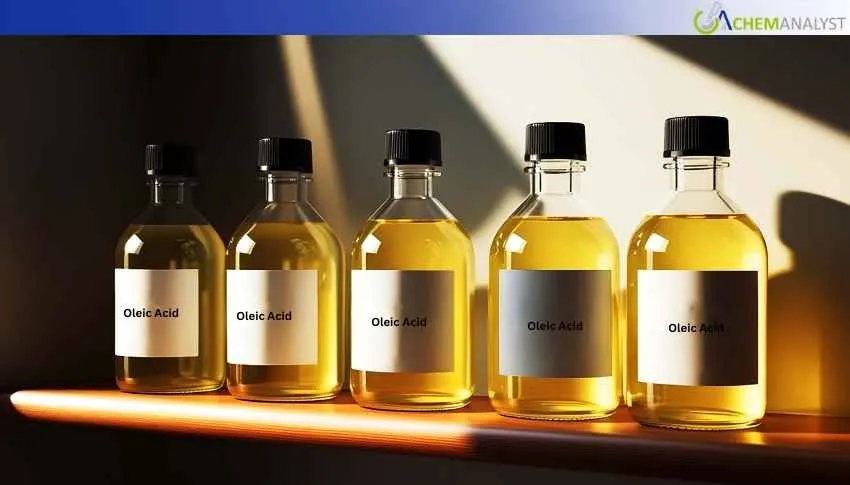
In February 2026, U.S. oleic acid markets strengthened significantly as prices rose due to strong demand and logistical challenges. Buyers rushed to secure food-grade oleic acid against tighter supply, driven by increased replacement costs from Southeast Asia and Argentina. Policy changes in Indonesia further tightened export allocations, compounding supply pressure. The Food & Beverage segment led the demand, with emulsifier makers and edible-oil processors increasing their intake to support products like packaged snacks, margarine, and bakery fats. Meanwhile, the Home and Personal Care sectors provided steady support, especially as natural soap sales grew ahead of spring launches. Logistical factors, including monsoon-related port delays in Malaysia and rail tank car shortages, added friction to supply chains. Looking ahead, analysts anticipate continued upward pressure on oleic acid prices due to aggressive purchasing by importers and higher feedstock costs. Stakeholders are advised to remain vigilant in securing their oleic acid needs and adapting procurement strategies to navigate the expected.
Selenis has effectively manufactured recycled PET chips using terephthalic acid sourced from Circ®, a textile-to-textile recycler based in Virginia. The chip production took place through a series of batches at Selenis' pilot plant in San-Giorgio, Italy. By utilizing inputs recovered from polycotton textile waste, Selenis has created high-quality PET chip, which has been further processed into DTY yarn. This yarn will play a crucial role in product development as Circ prepares for additional capsule launches. Selenis is leveraging the success of this initial collaboration phase and is committed to advancing towards an offtake partnership to support Circ's inaugural industrial facility.
Eduardo Santos, Head of Corporate Strategy at Selenis, remarked that the monomer synthesis showed a performance comparable to virgin terephthalic acid. He expressed optimism about the consistent quality of Circ's monomer output and anticipated future commercial success. Santos pointed out that the Circ partnership complements Selenis's existing mission and goals for a more sustainable textile industry. He further stated their anticipation of expanding upon this collaboration and providing support for Circ's forthcoming commercial production trials.