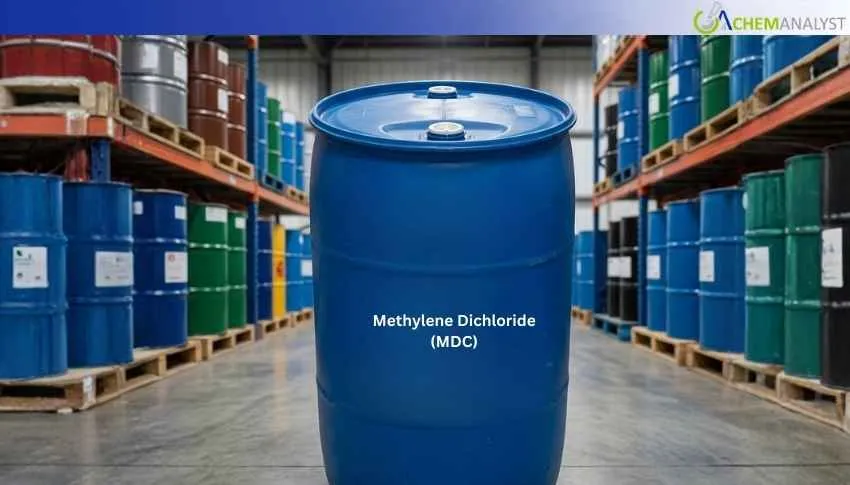
US MDC Prices Jump Nearly 6% as Feedstock Costs Rise Amid Middle East Tensions

US MDC Prices Jump Nearly 6% as Feedstock Costs Rise Amid Middle East Tensions

Chimamanda Ngozi Adichie 12-Mar-2026

The U.S. Methylene Dichloride (MDC) market remained under upward pressure during the week of 6 March 2026, driven by supply-side constraints and rising production costs. The ongoing Middle East conflict has indirectly affected MDC manufacturing, as elevated energy prices have increased expenses for chlorine- and methanol-based feedstocks. Domestic production continued steadily, but overall manufacturing growth slowed, with winter storms disrupting key Northeastern ports and causing delays in material deliveries. While Gulf Coast operations remained stable, constrained logistics and limited inventories supported a firm market environment. Demand for MDC remained strong, led by export activity to Mexico and Brazil, alongside selective domestic consumption. Long-term U.S. construction fundamentals, including public infrastructure and institutional projects, supported steady domestic demand, though near-term challenges such as labor shortages and higher borrowing costs tempered activity. Downstream formulators increasingly favored locally produced MDC as international price arbitrage narrowed. Overall, the combination of geopolitical uncertainty, supply chain challenges, and resilient demand maintained market stability, sustaining bullish sentiment in the U.S. MDC sector.


Selenis has effectively manufactured recycled PET chips using terephthalic acid sourced from Circ®, a textile-to-textile recycler based in Virginia. The chip production took place through a series of batches at Selenis' pilot plant in San-Giorgio, Italy. By utilizing inputs recovered from polycotton textile waste, Selenis has created high-quality PET chip, which has been further processed into DTY yarn. This yarn will play a crucial role in product development as Circ prepares for additional capsule launches. Selenis is leveraging the success of this initial collaboration phase and is committed to advancing towards an offtake partnership to support Circ's inaugural industrial facility. Eduardo Santos, Head of Corporate Strategy at Selenis, remarked that the monomer synthesis showed a performance comparable to virgin terephthalic acid. He expressed optimism about the consistent quality of Circ's monomer output and anticipated future commercial success. Santos pointed out that the Circ partnership complements Selenis's existing mission and goals for a more sustainable textile industry. He further stated their anticipation of expanding upon this collaboration and providing support for Circ's forthcoming commercial production trials.

We use cookies to deliver the best possible experience on our website. To learn more, visit our Privacy Policy. By continuing to use this site or by closing this box, you consent to our use of cookies. More info.