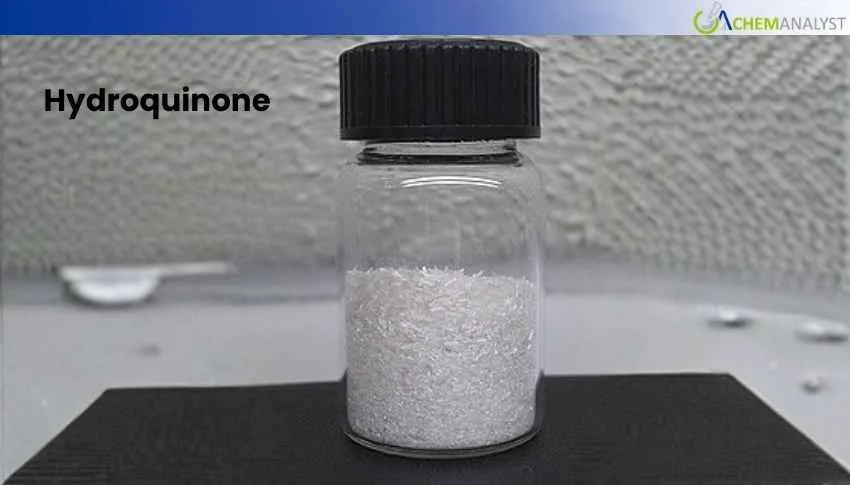
January activity in the Hydroquinone (Photographic Grade) market showed a balance of steady domestic production and subdued demand across channels. Gulf Coast facilities operated without interruption, while mid-month inventories accumulated as outbound shipments lagged capacity. Weak export orders from Canada, Mexico and Western Europe, along with cautious forward buying by photographic processors, specialty polymers converters and cosmetics players, kept spot activity thin. Late-month dynamics, stable runs, ample stocks, and softer overseas lifting, contributed to a softer Houston FOB bias, leaving distributors cautious heading into February. Weaker buying from film processors and polymer converters weighed on near-term demand, with cosmetics adopting a watchful stance amid regulatory discussions. ChemAnalyst noted a roughly seven percent decline in the monthly average, reflecting ample local supply and limited off-take. Production remained steady at the two US facilities; feedstock cost pressures were cited as a margin squeeze. The near-term outlook suggests modest restocking-driven bumps followed by gradual easing as inventories normalize, contingent on export demand and feedstock trends.
Selenis has effectively manufactured recycled PET chips using terephthalic acid sourced from Circ®, a textile-to-textile recycler based in Virginia. The chip production took place through a series of batches at Selenis' pilot plant in San-Giorgio, Italy. By utilizing inputs recovered from polycotton textile waste, Selenis has created high-quality PET chip, which has been further processed into DTY yarn. This yarn will play a crucial role in product development as Circ prepares for additional capsule launches. Selenis is leveraging the success of this initial collaboration phase and is committed to advancing towards an offtake partnership to support Circ's inaugural industrial facility.
Eduardo Santos, Head of Corporate Strategy at Selenis, remarked that the monomer synthesis showed a performance comparable to virgin terephthalic acid. He expressed optimism about the consistent quality of Circ's monomer output and anticipated future commercial success. Santos pointed out that the Circ partnership complements Selenis's existing mission and goals for a more sustainable textile industry. He further stated their anticipation of expanding upon this collaboration and providing support for Circ's forthcoming commercial production trials.