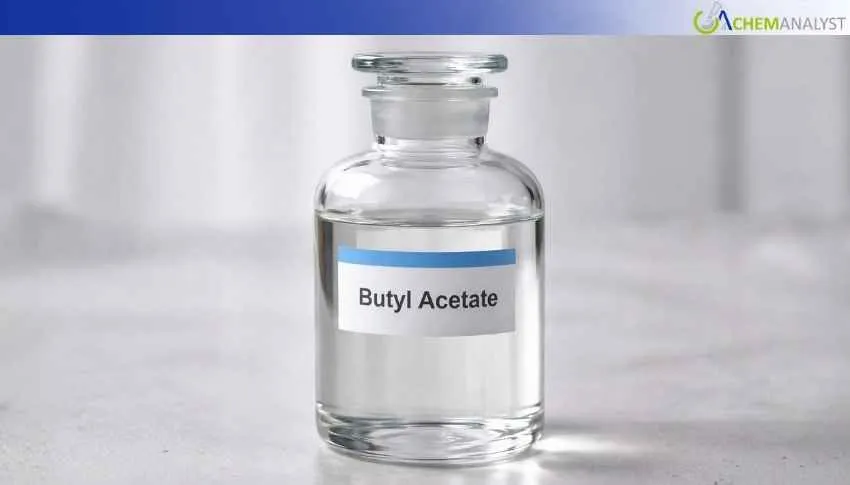
Butyl acetate in the US firmed through mid-March as tighter spot demand and inland bids countered subdued downstream buying. Inventories were comfortable due to Asian arrivals and uninterrupted Gulf-Coast production, but risk factors such as higher freight and insurance premia linked to Middle East tensions supported price gains. Restocking in coatings and automotive refinishing has yet to fully kick in, leaving demand uneven; export appetite remained soft against competitive Asian offers even as market sentiment turned firmer mid-month. Demand was patchy across end-uses, with coatings and inks notably soft: architectural coatings blenders deferred restocking while inks-for-flexible-packaging converters kept order volumes largely unchanged. Automotive refinishing demand held steady on light-vehicle assembly schedules. Supply fundamentals remained broadly steady, with key feedstocks stable and Gulf-Coast esterification running without disruption. Inland inventories were comfortable, supported by Asian cargoes and short container dwell times. Outlook suggests a mixed trajectory through summer: near-term firming with potential cooling later, driven by freight and domestic supply.
Selenis has effectively manufactured recycled PET chips using terephthalic acid sourced from Circ®, a textile-to-textile recycler based in Virginia. The chip production took place through a series of batches at Selenis' pilot plant in San-Giorgio, Italy. By utilizing inputs recovered from polycotton textile waste, Selenis has created high-quality PET chip, which has been further processed into DTY yarn. This yarn will play a crucial role in product development as Circ prepares for additional capsule launches. Selenis is leveraging the success of this initial collaboration phase and is committed to advancing towards an offtake partnership to support Circ's inaugural industrial facility.
Eduardo Santos, Head of Corporate Strategy at Selenis, remarked that the monomer synthesis showed a performance comparable to virgin terephthalic acid. He expressed optimism about the consistent quality of Circ's monomer output and anticipated future commercial success. Santos pointed out that the Circ partnership complements Selenis's existing mission and goals for a more sustainable textile industry. He further stated their anticipation of expanding upon this collaboration and providing support for Circ's forthcoming commercial production trials.