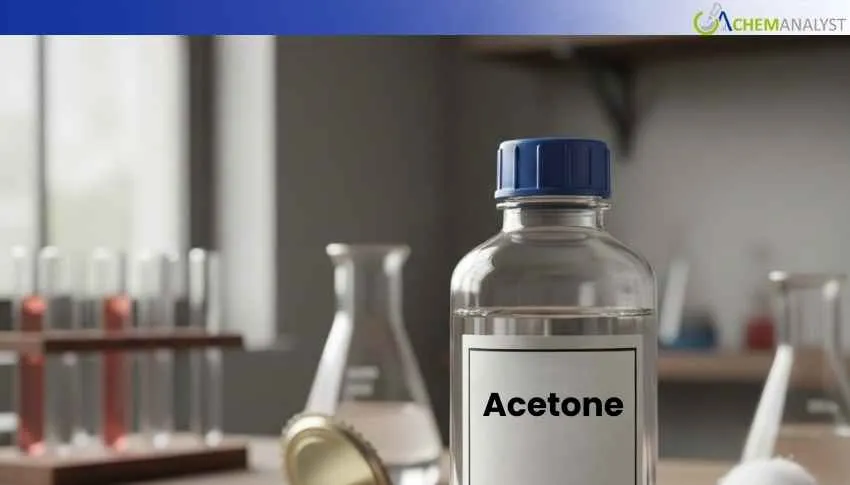
US Acetone Prices Rise 2.2% in early February 2026 Amid Demand Resilience and Tighter Supply

US Acetone Prices Rise 2.2% in early February 2026 Amid Demand Resilience and Tighter Supply

Aleksandr Pushkin 10-Feb-2026

US acetone demand-held segments remained resilient in early February as sturdy downstream pull and tighter merchant availability extended from January. Paint producers front-loaded purchases and steady demand from MMA/BPA-linked coatings chains supported robust inquiry into mid-January, while traders redirected cargoes toward forthcoming plastics capacity in Mexico and Brazil, tightening prompt availability. Adverse weather risks added near-term logistics uncertainty, reinforcing a constructive market tone as buyers positioned for immediate needs. Demand from coatings and resins remained a primary cushion, with construction activity channeling acetone into protective coatings and resins, and automotive downstream demand for coatings and MMA/BPA chains sustaining inquiries. Forward-buying by paint producers further constrained merchant supplies. Upstream factors provided mixed signals: rising benzene costs supported firmer spot levels, while any sustained propylene surplus presented a downside risk. Inventory tightening and cross-border redirections kept prompt balances tight, amplifying near-term momentum. The outlook remains firm in the near term, with vigilance on feedstock costs, logistics, and downstream demand shaping direction.


Selenis has effectively manufactured recycled PET chips using terephthalic acid sourced from Circ®, a textile-to-textile recycler based in Virginia. The chip production took place through a series of batches at Selenis' pilot plant in San-Giorgio, Italy. By utilizing inputs recovered from polycotton textile waste, Selenis has created high-quality PET chip, which has been further processed into DTY yarn. This yarn will play a crucial role in product development as Circ prepares for additional capsule launches. Selenis is leveraging the success of this initial collaboration phase and is committed to advancing towards an offtake partnership to support Circ's inaugural industrial facility. Eduardo Santos, Head of Corporate Strategy at Selenis, remarked that the monomer synthesis showed a performance comparable to virgin terephthalic acid. He expressed optimism about the consistent quality of Circ's monomer output and anticipated future commercial success. Santos pointed out that the Circ partnership complements Selenis's existing mission and goals for a more sustainable textile industry. He further stated their anticipation of expanding upon this collaboration and providing support for Circ's forthcoming commercial production trials.
Tags:

Acetone

We use cookies to deliver the best possible experience on our website. To learn more, visit our Privacy Policy. By continuing to use this site or by closing this box, you consent to our use of cookies. More info.