MDI Prices Appreciate 2.3% in Europe, as the Production Costs Rise

MDI Prices Appreciate 2.3% in Europe, as the Production Costs Rise

John Keats 06-Feb-2026

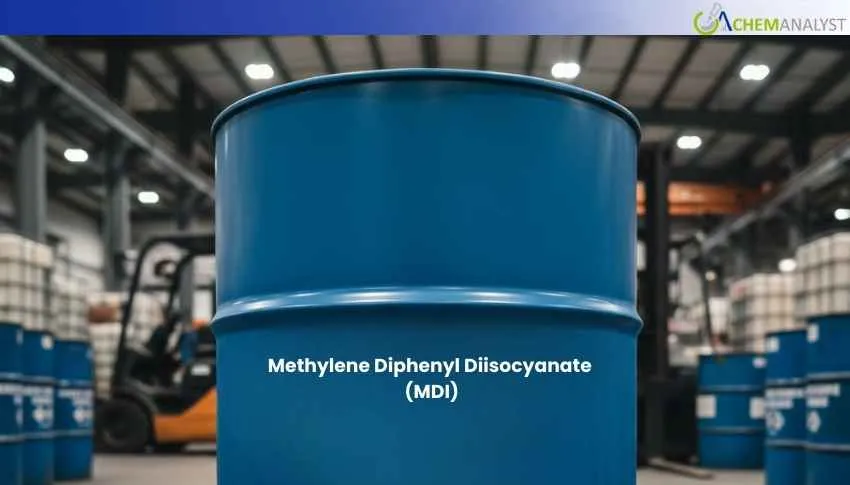
In the second half of January 2026, MDI prices went up in the European market due to a shortage of supply and an increase in feedstock prices. Production remained low as processors were cautious, which provided further support to prices. MDI consumption remained steady during the month, sheltered by consistent demand from main end-uses in the context of heightened economic uncertainty. Rigid foam applications accounted for the majority of demand on the back of continuing insulation requirements in building, refrigeration, and industrial applications, despite winter weather hampering activity. Energy-saving schemes and building refurbishment schemes were backing demand for both spray foam and infiltration material. Constant demand from the automotive and appliance industries in molded foams, adhesives, and composites, and some support from Coatings, Adhesives, Sealants, Elastomers (CASE) industries applications, stood out. European trade was firm but cautious, with some improvement in outward trade. For the future, the MDI prices will increase in the first quarter of 2026. Strengthening industrial activity, growing purchasing interest, scheduled plant shut-downs, and persistent cost pressure seem likely to keep the market firm in the short term.


Selenis has effectively manufactured recycled PET chips using terephthalic acid sourced from Circ®, a textile-to-textile recycler based in Virginia. The chip production took place through a series of batches at Selenis' pilot plant in San-Giorgio, Italy. By utilizing inputs recovered from polycotton textile waste, Selenis has created high-quality PET chip, which has been further processed into DTY yarn. This yarn will play a crucial role in product development as Circ prepares for additional capsule launches. Selenis is leveraging the success of this initial collaboration phase and is committed to advancing towards an offtake partnership to support Circ's inaugural industrial facility. Eduardo Santos, Head of Corporate Strategy at Selenis, remarked that the monomer synthesis showed a performance comparable to virgin terephthalic acid. He expressed optimism about the consistent quality of Circ's monomer output and anticipated future commercial success. Santos pointed out that the Circ partnership complements Selenis's existing mission and goals for a more sustainable textile industry. He further stated their anticipation of expanding upon this collaboration and providing support for Circ's forthcoming commercial production trials.

We use cookies to deliver the best possible experience on our website. To learn more, visit our Privacy Policy. By continuing to use this site or by closing this box, you consent to our use of cookies. More info.