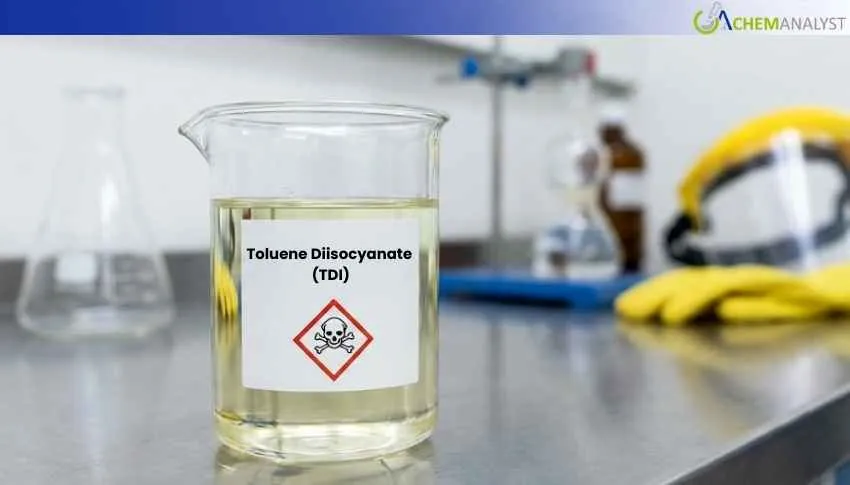
US Toluene Diisocyanate (TDI) prices dipped in the first half of January 2026 on weaker demand from major polyurethane consuming sectors and buyers waiting to see how the year would start. The production of automobiles slowed, so demand for seating and interior foams was reduced, but steady support was provided by construction-based applications, including insulation and sealants for use in public-sector and commercial building projects. Furniture and bedding producers bought in a tepid fashion as they continued to recover from slow holiday sales, leaving demand overall on average but tepid. TDI production remained stable in the face of rising energy-related cost pressure, and US exports remained strong on the back of a competitive dollar and robust demand overseas on the supply side. In terms of the outlook, market trends signal a probable price upturn later this quarter because of early-year restocking, an improving auto outlook, especially for EV and hybrid models, and a relatively tight supply situation due to logistics constraints and controlled operations of plants.
Selenis has effectively manufactured recycled PET chips using terephthalic acid sourced from Circ®, a textile-to-textile recycler based in Virginia. The chip production took place through a series of batches at Selenis' pilot plant in San-Giorgio, Italy. By utilizing inputs recovered from polycotton textile waste, Selenis has created high-quality PET chip, which has been further processed into DTY yarn. This yarn will play a crucial role in product development as Circ prepares for additional capsule launches. Selenis is leveraging the success of this initial collaboration phase and is committed to advancing towards an offtake partnership to support Circ's inaugural industrial facility.
Eduardo Santos, Head of Corporate Strategy at Selenis, remarked that the monomer synthesis showed a performance comparable to virgin terephthalic acid. He expressed optimism about the consistent quality of Circ's monomer output and anticipated future commercial success. Santos pointed out that the Circ partnership complements Selenis's existing mission and goals for a more sustainable textile industry. He further stated their anticipation of expanding upon this collaboration and providing support for Circ's forthcoming commercial production trials.