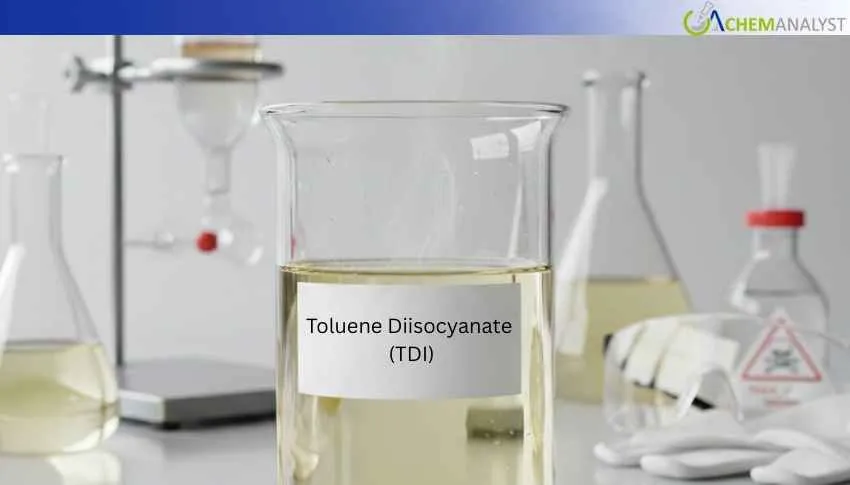
Toluene Diisocyanate (TDI) prices in Europe increased in December 2025 as supply became tighter, while downstream demand stayed steady. Several producers operated with reduced rates, resulting in tighter material availability, although feedstock toluene prices softened on the back of declining crude oil and reformate prices. Winter brought a rise in transportation and energy costs and fewer imports from Asia. Thus, supply options for buyers became limited. Regional trade was stable, yet cautious, as regular shipments continued to be received in Europe from Asia amid fluctuating world trade. Demand was uncertain but solid, bolstered by year-end demand in the flexible foam, automotive, and construction industries. Weak furniture and bedding demand kept block-foam output depressed, but steady TDI usage was supported by robust car sales and expanding electric vehicle (EV) production. Looking ahead, prices are set to climb higher due to improving buying interest, resumption of construction activities post-holiday, and supply being further tightened due to scheduled plant shutdowns, as demand from PU sectors to make foams, insulation, and auto seating continues to expand.
Selenis has effectively manufactured recycled PET chips using terephthalic acid sourced from Circ®, a textile-to-textile recycler based in Virginia. The chip production took place through a series of batches at Selenis' pilot plant in San-Giorgio, Italy. By utilizing inputs recovered from polycotton textile waste, Selenis has created high-quality PET chip, which has been further processed into DTY yarn. This yarn will play a crucial role in product development as Circ prepares for additional capsule launches. Selenis is leveraging the success of this initial collaboration phase and is committed to advancing towards an offtake partnership to support Circ's inaugural industrial facility.
Eduardo Santos, Head of Corporate Strategy at Selenis, remarked that the monomer synthesis showed a performance comparable to virgin terephthalic acid. He expressed optimism about the consistent quality of Circ's monomer output and anticipated future commercial success. Santos pointed out that the Circ partnership complements Selenis's existing mission and goals for a more sustainable textile industry. He further stated their anticipation of expanding upon this collaboration and providing support for Circ's forthcoming commercial production trials.